What to eat on Isla Múcura: typical Colombian Caribbean dishes
On a Caribbean island, the food explains itself: whatever comes from the sea, coconut, plantain and a handful of recipes repeated all along Colombia's coast because they work.
On a Caribbean island, the food explains itself: whatever comes from the sea, coconut, plantain and a handful of recipes repeated all along Colombia’s coast because they work.
If you’re wondering what to eat on Isla Múcura, this guide covers the typical dishes worth trying, what goes into each one, where to find them at the hotel and how to plan your meals during your stay.
What to expect from Colombian Caribbean cooking
Food on Colombia’s Caribbean coast is built on a few ingredients and a lot of flavor. These are the ones you’ll see again and again:
- Coconut: in the rice, in fish and seafood sauces, in lemonades and in desserts.
- Plantain: green, as crispy patacones, or ripe, sweet and soft.
- Fish and seafood: at the center of almost every main course.
- Hogao: a tomato and onion sauce served with meat, fish and soups.
- Suero costeño: a thick, tangy cream served with empanadas, cassava or patacones.
With that base, it’s easy to read any menu in the region, including the hotel’s.
Typical dishes to try on Isla Múcura
Coconut rice and patacones, the classic pair
Almost every fish dish arrives with coconut rice and patacones. The rice is cooked in coconut milk and comes out slightly sweet. When it’s left to toast until the coconut caramelizes, it’s called arroz titoté and takes on a deeper flavor.
A patacón is green plantain fried, flattened and fried again. Crispy on the outside and good with just about anything.
Island fish in coconut sauce or with hogao
This is the dish that best sums up the island. A fish fillet or steak slow-cooked in a mild coconut sauce, or served with Creole hogao and vegetables.
You can also order the catch of the day, served with coconut rice, salad and patacón, or fish in zarzuela, a thick seafood cream.
Posta cartagenera
Cartagena’s signature beef dish: a cut marinated in spices and panela, cooked slowly until tender and covered in its own dark, sweet sauce.
It comes with coconut rice and plátano en tentación, ripe plantain cooked in syrup. If you want to try something other than fish, start here.
Mote de queso
A thick yam soup with costeño cheese and hogao, typical of the Caribbean region. It’s comforting and surprises first-timers, because it combines the creaminess of the yam with the saltiness of the cheese.
Seafood casserole and seafood rice
Two classics for anyone who wants variety. The cazuela brings together shrimp, mussels, squid and fish in a spiced broth. The seafood rice is cooked in coconut milk and comes out creamy.
Coconut shrimp
Shrimp slow-cooked in coconut sauce with garlic, onion and peppers. They go perfectly with coconut rice.
Lobster
Lobster is priced by weight, so you’ll be quoted when you order. If you’d rather have an individual portion, the baby lobster with garlic butter is the most practical choice.
Snacks by the sea
Between meals, Brisas Bar serves the more casual side of coastal cooking. A few must-tries:
- Ceviches: shrimp, fish or chicharrón, with plantain chips or patacón.
- Shrimp empanadas with suero costeño.
- Picada costeña: chorizo, butifarra, chicharrón, fried cassava and patacón to share.
- Shrimp cocktail: chilled, with pink sauce and a citrus touch.
Coastal desserts and drinks
To finish, two very regional desserts: dulces típicos del Caribe, made with coconut, papaya, milk and panela, and arroz con leche, rice pudding served cold or warm with cinnamon.
To drink, try the coconut lemonade, creamy and ice-cold, or coconut water served in the coconut itself. If you’d like a cocktail, the house drinks use tropical fruit and rum, like the Múcuraya or the Coco Re-loco, served inside a coconut.
The island’s flavors at a glance
| Dish | What’s in it | Where to try it |
|---|---|---|
| Fish in coconut sauce | Fish, coconut milk, spices | Restaurant |
| Posta cartagenera | Beef, spices, panela, coconut rice | Restaurant |
| Mote de queso | Yam, costeño cheese, hogao | Restaurant |
| Seafood casserole | Shrimp, mussels, squid, fish | Restaurant |
| Coconut shrimp | Shrimp, coconut sauce | Restaurant |
| Shrimp ceviche | Shrimp, pink sauce, onion, cilantro | Bar |
| Shrimp empanadas | Shrimp, suero costeño | Bar |
| Picada costeña | Chorizo, butifarra, chicharrón, cassava, patacón | Bar |
| Dulces típicos | Coconut, papaya, milk, panela | Restaurant |
| Coconut lemonade | Lime, coconut cream | Restaurant and bar |
Where and when to eat on the island
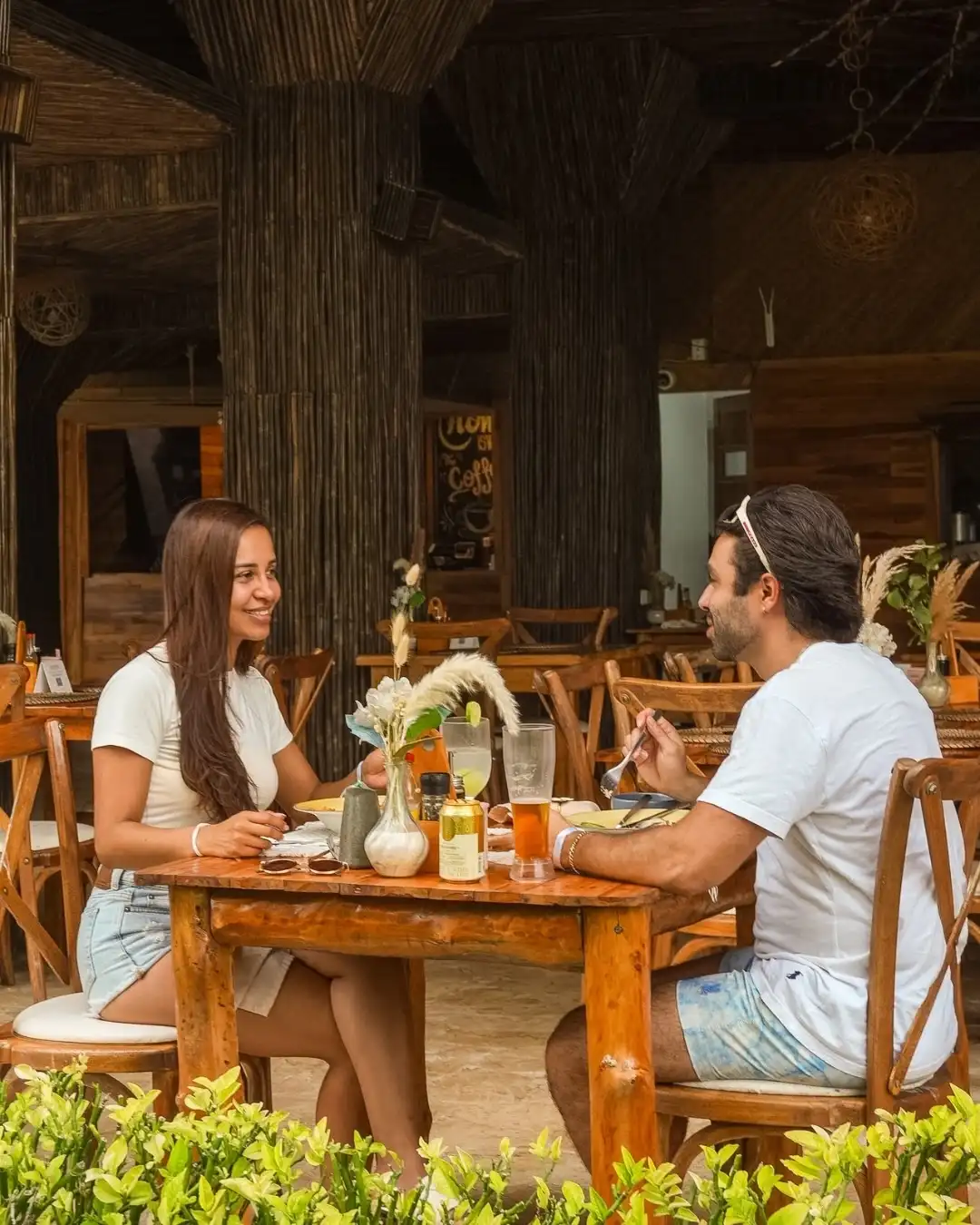
All of the hotel’s food is served in two places: Las Palmas Restaurant, with Caribbean cooking by the sea, and Brisas Bar, for snacks and for watching the sunset.
- Breakfast: 7:00 to 10:00 a.m. at the restaurant.
- Lunch and dinner: continuous service from 11:00 a.m. to 9:00 p.m. at the restaurant.
- Snacks and room service: 2:00 to 10:00 p.m.
You can order à la carte or book the meal plan, which includes breakfast, lunch and dinner. With the plan you choose from the menu; a few special dishes, such as grilled octopus or baby lobster, carry a surcharge. Children aged 0 to 8 don’t pay for the meal plan if it’s booked together with the stay, and there’s a kids’ menu.
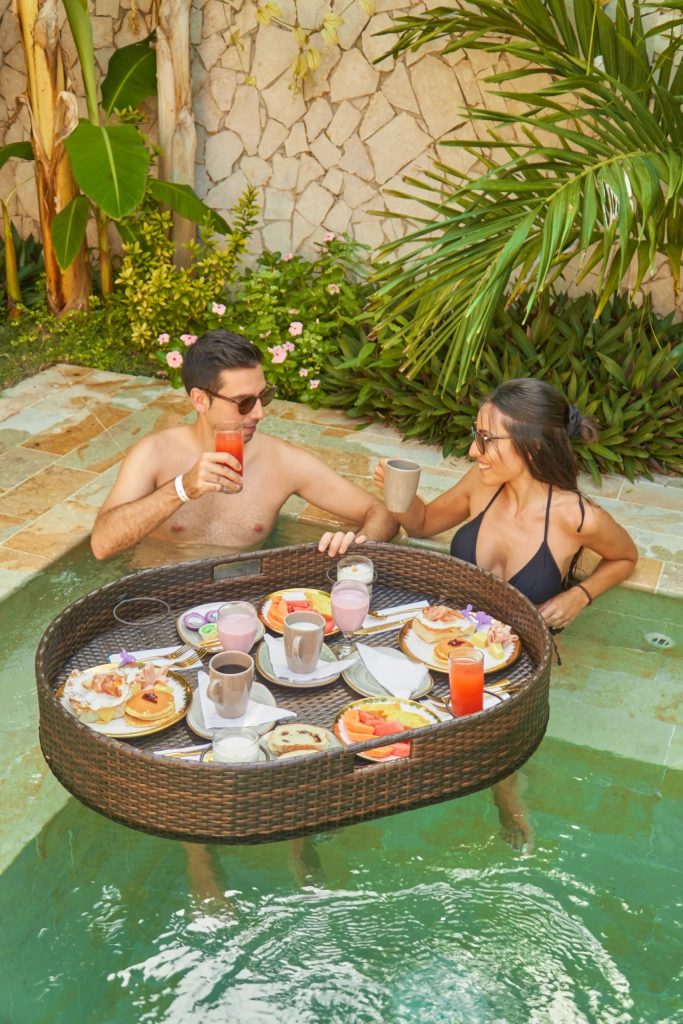
If you’re traveling as a couple, breakfast in bed by the sea is another way to start the day with Caribbean flavors.
A practical tip: if you have any allergy or dietary restriction, mention it when you book. On an island, ingredients arrive by boat, and with notice the team can prepare better.
Frequently asked questions about what to eat on Isla Múcura
What is the typical food on Isla Múcura?
Colombian Caribbean coastal cooking: fish and seafood with coconut rice and patacón, posta cartagenera, mote de queso and desserts made with coconut and panela. Coconut and plantain show up in almost everything.
Are there vegetarian options on Isla Múcura?
Yes. The restaurant menu has vegetarian dishes, such as island vegetable rice, quinoa paella and pastas, plus light starters. If you follow a vegan diet, let the hotel know when you book.
Can you eat lobster on Isla Múcura?
Yes. Lobster is priced by weight and quoted when you order. There’s also baby lobster as an individual portion.
Taste the Caribbean at the table
Eating on Isla Múcura is part of the trip: fish in coconut sauce at midday, a coconut lemonade in the afternoon and a ceviche by the sea as the sun goes down.
Take a look at the Las Palmas Restaurant menu and choose what you’ll try first. If you have questions about the meal plan or a dietary restriction, message us on WhatsApp.